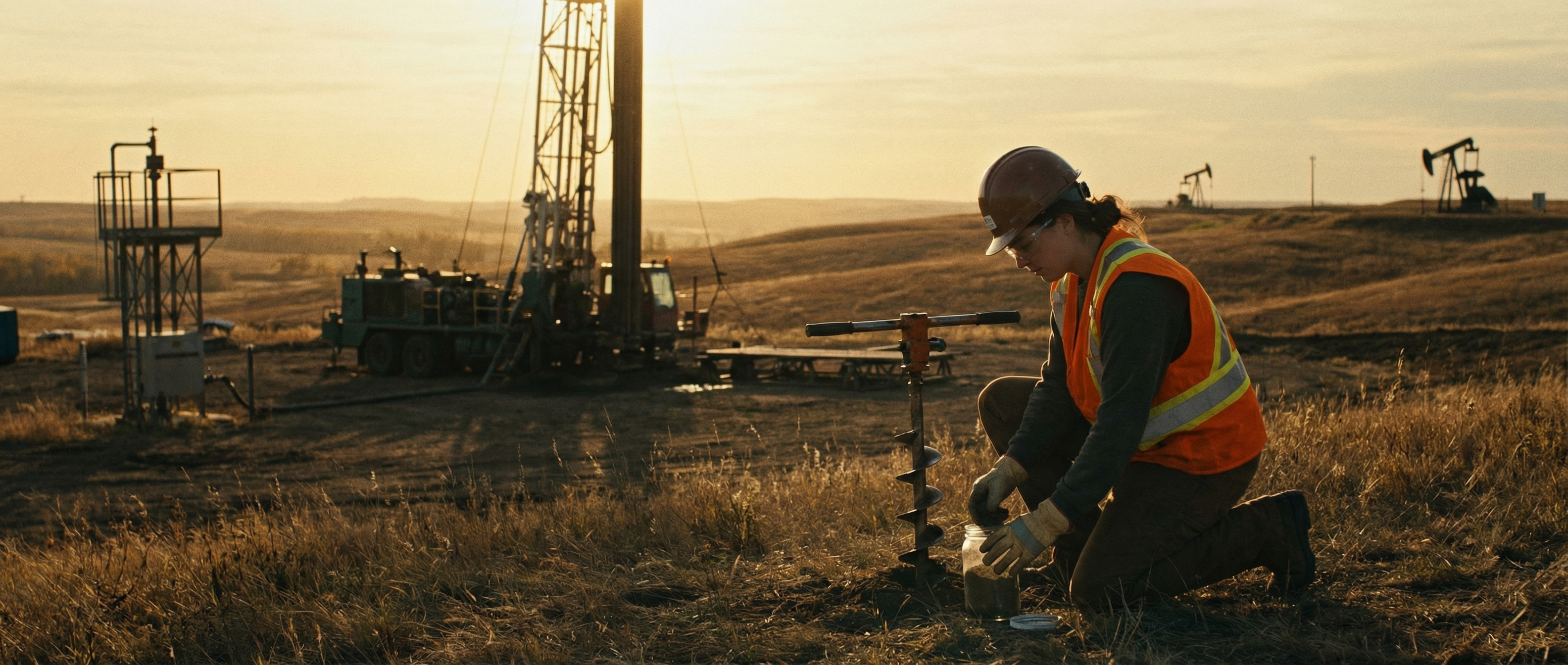
Environmental technician collecting soil samples at an oil well site

Analysis Automation

Stop spending hours manually validating lab results from wellsite investigations. [GRYD] processes your environmental data automatically, running statistical analysis across soil, groundwater, and surface water parameters in seconds.

  • Automated data validation and QA/QC checks
  • Statistical analysis across multiple environmental media
  • Batch processing for multi-site portfolios
  • Trend detection and temporal pattern recognition
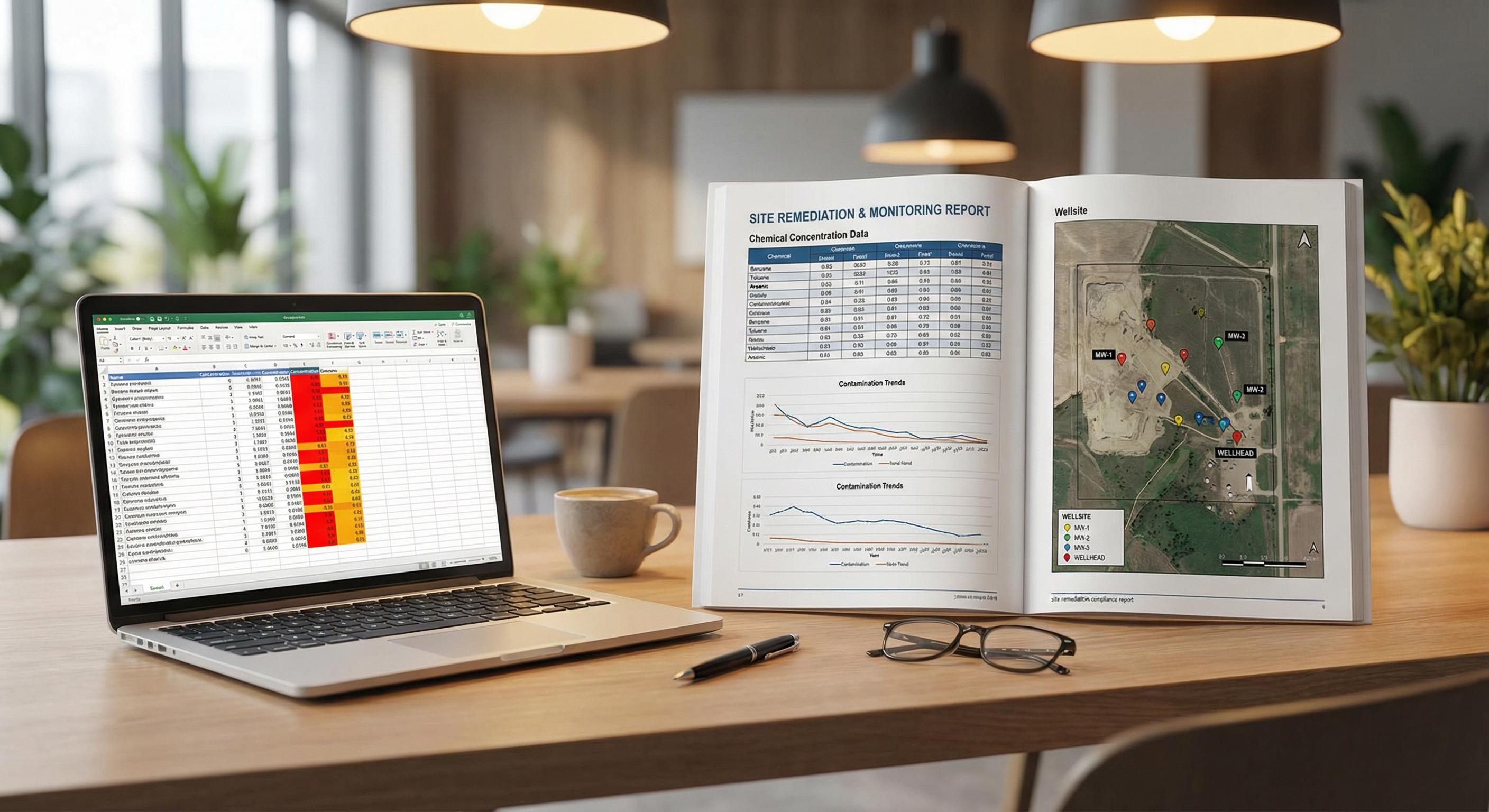
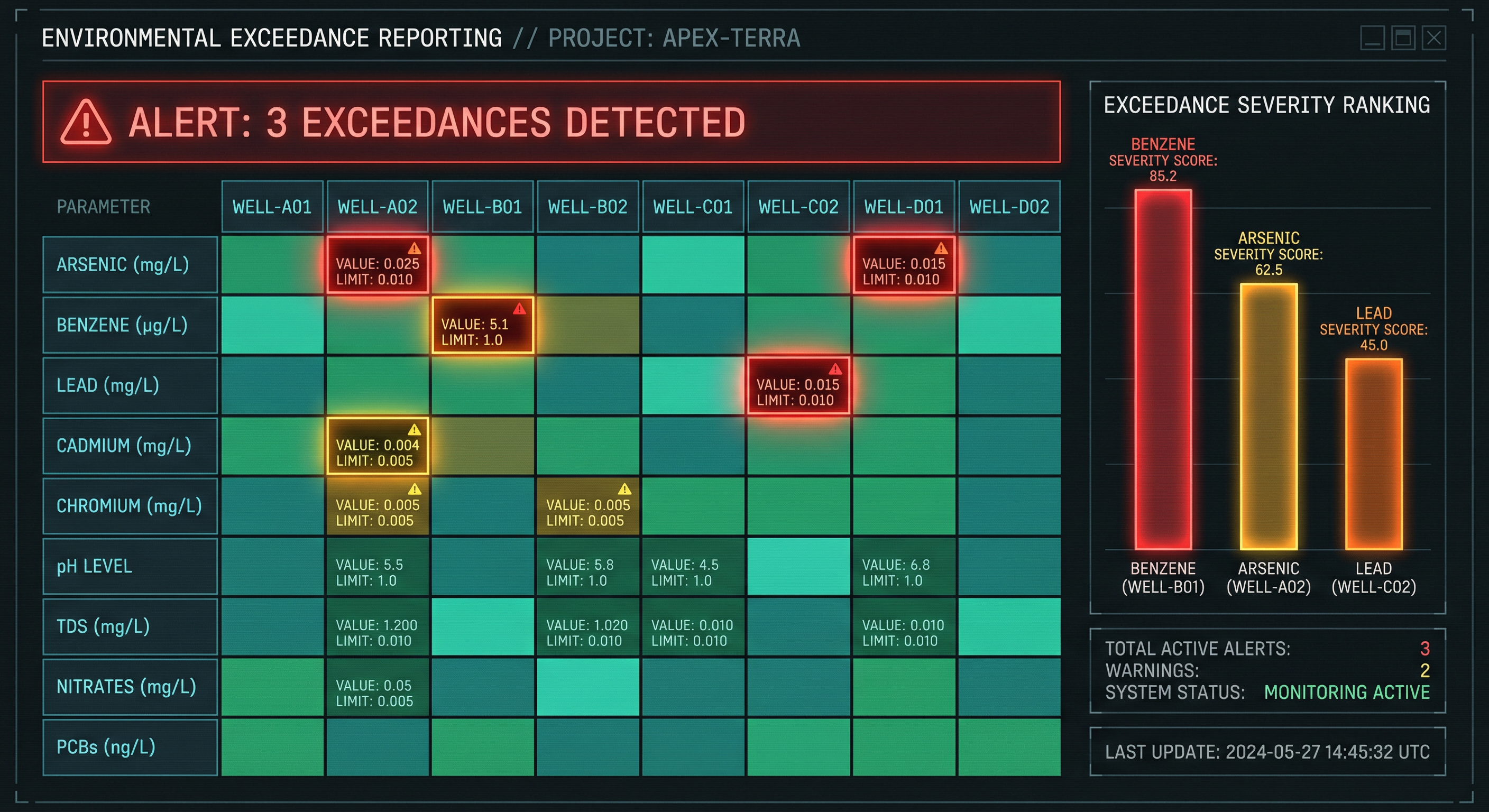
Environmental exceedance reporting dashboard showing parameter threshold alerts across monitoring wells with severity ranking

Exceedance Reporting & Flagging

Never miss a threshold breach again. [GRYD] continuously compares your analytical results against applicable guidelines and instantly flags any exceedances -- from petroleum hydrocarbons to heavy metals and salinity parameters.

  • Instant flagging against regulatory thresholds
  • Prioritized exceedance summaries by severity
  • Historical exceedance tracking and trend analysis
  • Export-ready exceedance reports for regulatory submission
Environmental compliance report with exceedance data and wellsite monitoring map

Multi-Tiered Guideline Scenarios

[GRYD] supports multi-tiered environmental guideline frameworks across jurisdictions -- from generic screening levels to site-specific background calibration, custom overrides, background comparisons, ND Policy definitions, and full pathway scenario analysis. Import your data once, then re-screen it against multiple pathway configurations without re-uploading -- so you can evaluate different remediation strategies from a single committed dataset.

  • Multi-tiered guideline library with cross-jurisdictional support
  • Depth-bin background calibration with P95 site-specific thresholds
  • Site Specific Overrides & background concentration comparisons
  • Depth-interval background analysis
  • Non-Detect (ND) Policy definition & handling
  • Re-run pathway scenarios on locked datasets -- multiple configurations, one import
  • Land use-specific criteria with regular guideline updates
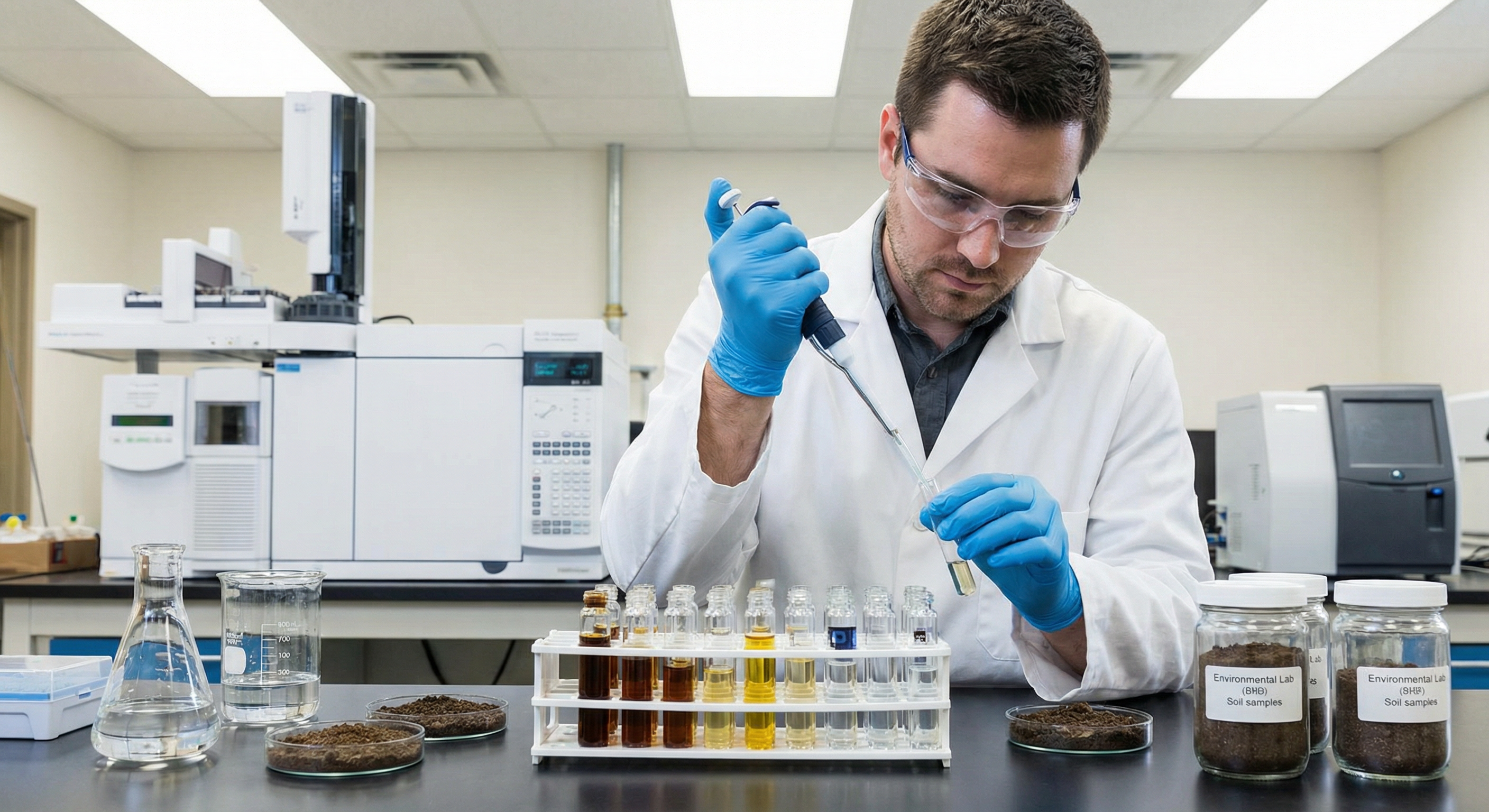
Laboratory technician analyzing environmental soil and water samples

Conversion Analysis

Lab data arrives messy — mismatched units, inconsistent analyte naming, salinity expressed five different ways, hydrocarbon fractions split across CWS and Tier 2A definitions, coordinates in everything from UTM to lat/long to local site grids. The Conversion Analysis engine normalizes all of it so the downstream screening, salinity, and spatial workflows run on clean, comparable data.

Module 1

Lab Analysis Scope & EDD

Auto-detects EDD formats from major Canadian labs, maps analyte aliases to canonical names, normalizes units (mg/L, µg/L, mg/kg, ppm, ppb), and reconciles QA/QC flags. Carries a conversion audit trail for every value touched.

Module 2

Salinity

Converts between EC (dS/m, mS/cm, µS/cm), SAR inputs, soluble cations/anions, and ion balance. Handles 1:1, 1:2, and saturated-paste extracts, with depth-bin awareness for prairie agricultural sites.

Module 3

Hydrocarbon

Reconciles PHC F1–F4 fractions across CCME, Tier 2A, and provincial frameworks. BTEX and PAH speciation, sum-of-PAH calculations, and TPH normalization — with explicit handling of overlap zones between methods.

Module 4

Spatial

Converts between UTM zones, NAD83/WGS84 datums, ATS legal land descriptions, and local site grids. Snaps borehole and sample coordinates to a single project CRS so every downstream map, plume, and volume calculation is consistent.
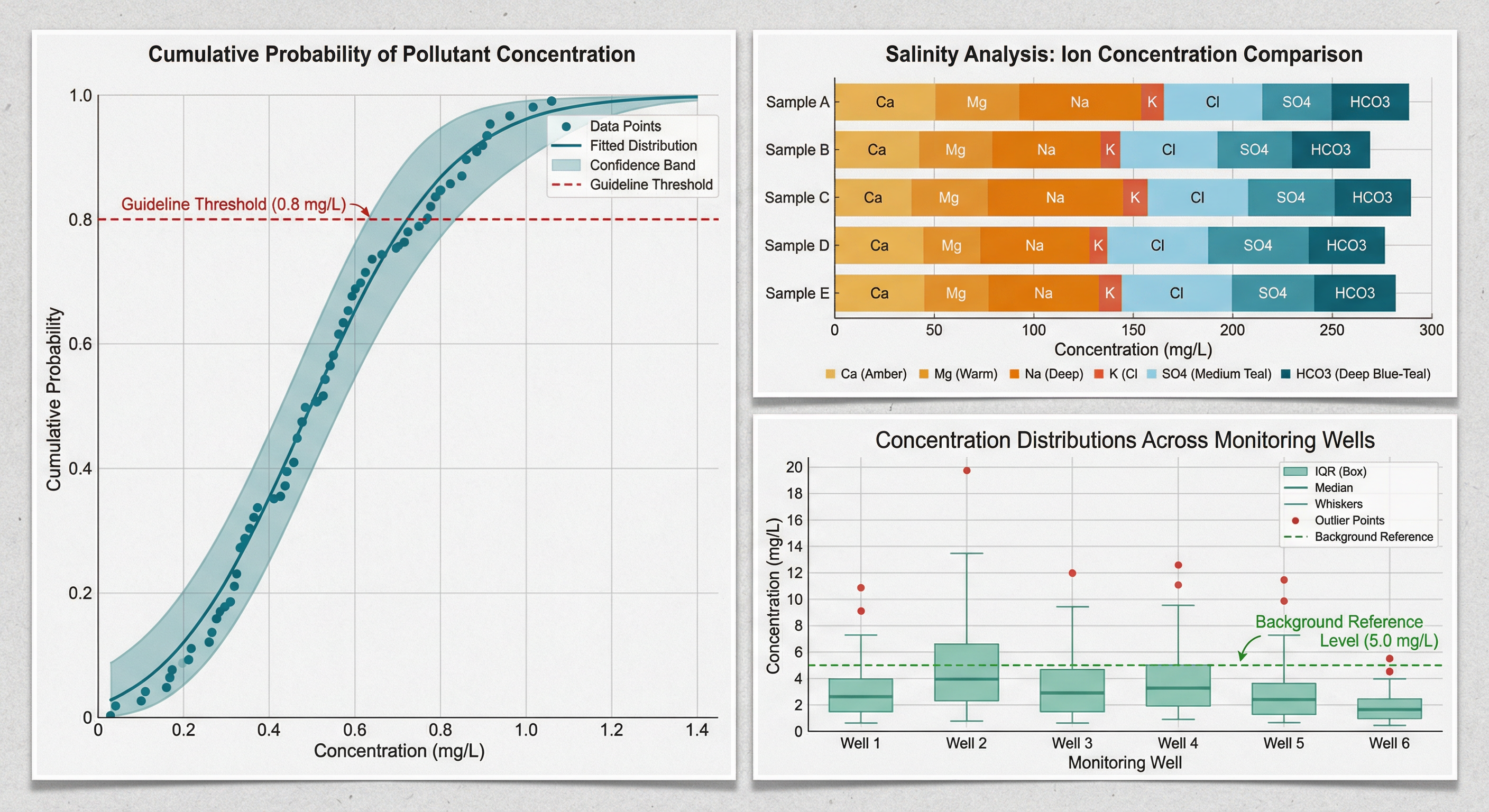
Environmental statistics suite showing cumulative probability distribution, salinity ion concentration comparison, and monitoring well box plots

Site-Specific Background Calibration & Environmental Statistics

[GRYD] goes beyond basic statistical summaries with a purpose-built background calibration engine. The delta-shift algorithm recalibrates EC and SAR thresholds by depth bin using P95 site-specific background data -- giving you a defensible, site-specific override that holds up to regulatory scrutiny. Pair that with robust environmental statistics for non-detect handling, background comparisons, and salinity parameter analysis, all powered natively in Excel.

  • Depth-bin P95 background calibration for site-specific EC/SAR thresholds
  • Delta-shift algorithm for defensible site-specific overrides
  • Non-detect substitution methods (Kaplan-Meier, ROS, DL/2)
  • Background vs. site concentration comparison testing
  • Salinity parameter analysis -- SAR, EC, ion balance, and TDS
  • Distribution analysis and upper confidence limits (UCLs)
  • All calculations run natively in Excel -- no external software needed
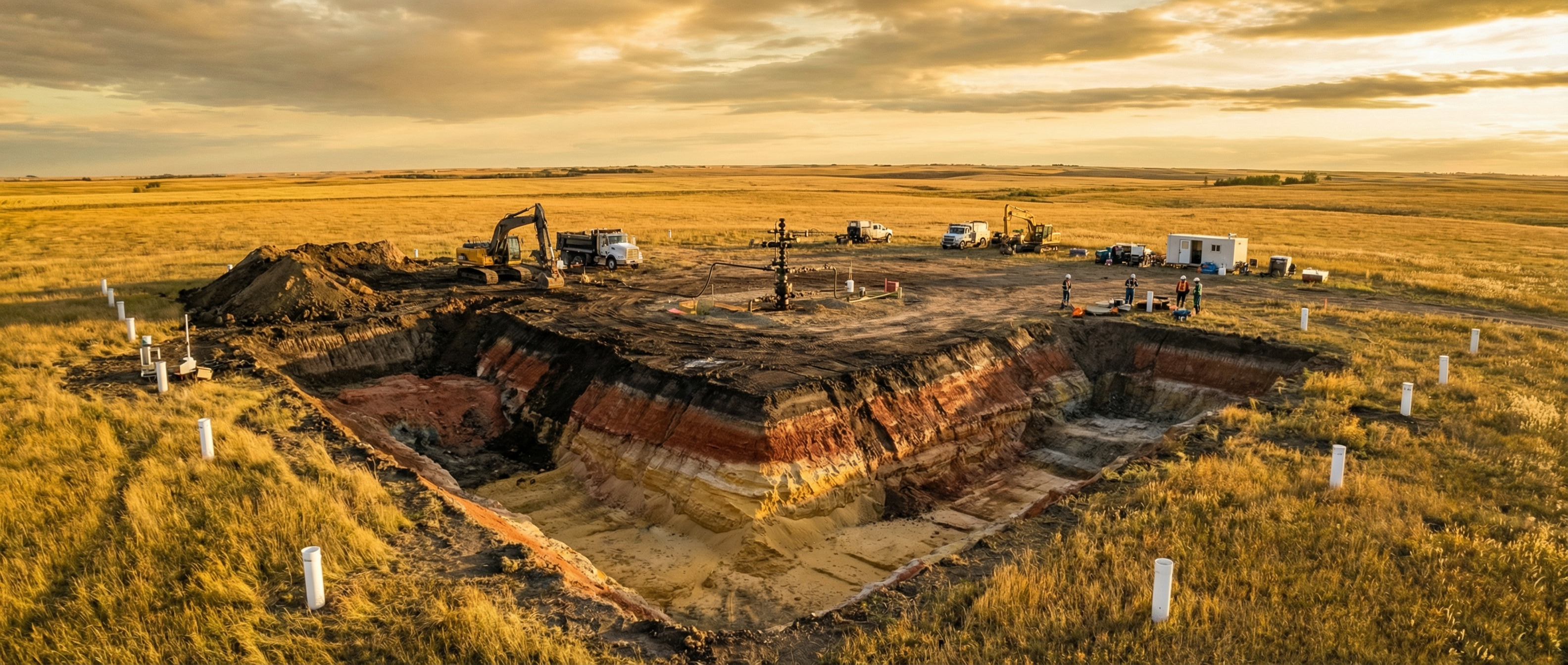
Aerial GIS mapping view of environmental monitoring site

GIS, Plume Mapping & Volume Calculator

Visualize your project sites with integrated GIS mapping and plume delineation -- then go further with automated excavation volume calculations. [GRYD]'s GIS module computes soil volumes in m³ from plume contour bands per exceedance threshold, giving you remediation cost-scoping inputs directly from your spatial data. No more manual polygon calculations or third-party GIS software.

  • Interactive site maps directly in your Excel workbook
  • Monitoring well and sample location plotting
  • GIS-based plume mapping with spatial interpolation
  • Excavation volume calculator -- m³ of soil per contour band and exceedance threshold
  • Contamination plume delineation and boundary overlays
  • ATS (Alberta Township System) grid overlay for wellsite and quarter-section context
  • Pre-defined site area zones — Well Centre, DWDA, Sump, Flare Pit, AST/UST, Spill, Staining
  • Traffic-light borehole markers tied to live screening results
  • Switchable basemaps — street, satellite, topographic
  • Export map visuals for reports and regulatory submissions
Ask GRYD
Which wells need urgent attention?
MW-04 and MW-07 both exceed AB Tier 2A for benzene by 4× and 6× respectively, at 3–5 m depth. Spatial pattern suggests a common source near the wellhead. Cited in run #2024-11-14-a.
Summarize the salinity story.
EC at 0–1 m is 2.4× site-specific background; SAR shows sodicity in the DWDA. Consistent with a historic produced-water release.

AI Interpretation Agent — Ask GRYD

Get a second pair of eyes on every exceedance report. The Ask GRYD agent is grounded in your site context and screening results — ask "which wells need urgent attention?", "summarize the salinity story", or "what's the regulatory significance of this benzene exceedance under Alberta Tier 2A?" — and get cited, defensible answers in seconds.

  • Grounded in your actual screening results — not generic web advice
  • Plain-language interpretation of severity, spatial patterns, and analyte-specific risk
  • Regulatory context for the guideline pack active on this run (Tier 1, Tier 2A, CCME)
  • Citations back to the underlying rows, wells, depth intervals, and run IDs
  • Runs in seconds — right next to the exceedance report it's interpreting
Run #2026-05-12-c Current
AB Tier 2A v2026.04 · CCME v2024.09
Background pack: site-specific P95, depth-binned
Run #2026-04-18-a Archived
AB Tier 1 v2025.11 · CCME v2024.09
Background pack: generic screening levels
Run #2026-02-03-b Archived
AB Tier 2A v2025.10 · CCME v2024.09
Background pack: site-specific P95

Audit Trail & Run History

Every screening run is logged, timestamped, and stamped with the regulatory pack version it used. Re-open any prior run, see exactly which guidelines were active, and reproduce or defend the result months later — without re-importing data.

  • Every run logged with a unique ID, timestamp, and user attribution
  • Regulatory pack version stamped on every run (e.g. AB Tier 2A v2026.04)
  • Pathway, background, and ND policy snapshot preserved for full reproducibility
  • Re-open historical runs without re-importing data or re-running labs
  • Side-by-side diff of two runs — see exactly what changed between submissions
  • Defensible audit trail for regulatory review, file transfers, and litigation hold

Visual Forensics Suite

25+ Specialty Charts & Diagrams

A full forensic hydrogeochemistry engine — not just charts. Every visualization is grounded in your screening data, publication-ready, and exportable. Grouped by what you're actually trying to answer.

Water Chemistry & Classification

Classify groundwater type, identify mixing zones, and compare ion signatures.

Piper Stiff Schoeller Wilcox Gibbs

Salinity & Soil Chemistry

Diagnose salt sources, sodicity, and irrigation suitability on agricultural and wellsite soils.

Salt Fingerprint Brine Meter Ion Balance SAR/EC Distributions Clay Sponge Fertilizer Finder

Source Discrimination & Forensics

Pinpoint contamination origin: refined product vs. crude, biogenic vs. anthropogenic.

PAH Cross-Plot Source Discriminator PHC Chromatogram Metal Correlation

Degradation & Natural Attenuation

Track parent-daughter chains and confirm in-situ biodegradation pathways.

Decay Tracker (PCE → TCE → DCE → VC → Ethene)

Geological Context

Tie contamination to depth, lithology, and stratigraphy.

Depth Doctor Geology Matcher Depth Profile

Compliance Views

Visualize exceedances against active guidelines for reports and regulator submissions.

Compliance Box Compliance Bridge Exceedance Bar Analyte Radar Normality Check Box Plot
Local-first No uploads Workbook-resident No vendor lock-in

Privacy & Security

[GRYD] is local-first by design. Your lab results, site context, and screening runs never leave the workbook unless you choose to share it. There's no shared SaaS database, no mandatory cloud sync, and no vendor account that holds your data hostage. The audit trail is the file you already control.

  • Data stays in your workbook — no automatic uploads to GRYD or third parties
  • Runs entirely inside Excel's sandbox — permissions you already understand
  • No vendor lock-in — uninstall the add-in, your workbook still opens and stays intact
  • AI co-pilot inference can be configured to your organization's policy (on-device, private endpoint, or off)
  • Defensible chain of custody from raw lab EDD through to final report

More Tools on the Way

We're building the most comprehensive environmental intelligence toolkit for oil & gas remediation. Here's what's coming next.

On the Roadmap

  • Soil vapour & sediment matrices (expanding beyond soil and groundwater)
  • Sub-slab and indoor air pathway screening
  • Risk-based screening workflows (tiered, exposure-pathway-driven)
  • Multi-jurisdictional guideline expansion — BC, SK, MB, NWT, YT, QC, ON, plus US EPA / California / Texas / New York
  • Team workspaces & SSO for consulting firms and multi-site portfolios
  • Automated statistical anomaly detection in time-series data (distinct from the Ask GRYD agent, which ships today)
  • Risk assessment scoring and prioritization engine
  • Regulatory submission automation and tracking

See [GRYD] in Action

Let us show you how [GRYD] can transform your environmental reporting workflow.

Request a Demo